Covered vs. Open Trailer Parking in Galveston: What the Real Cost Difference Looks Like
Covered vs. Open Trailer Parking in Galveston: What the Real Cost Difference Looks Like
Habib Ahsan
April 26th, 2026
Most trailer owners in Galveston pick a parking option based on the monthly rate and move on. It’s the obvious number to look at. But the monthly rate is only part of the story when you’re storing a trailer on the Gulf Coast, and the difference between covered vs. open trailer parking in Galveston often comes down to what you’re willing to spend on maintenance over time. The upfront cost gap between the two is real. So is the long-term cost gap if you choose the wrong one for your situation.
What Open Trailer Parking Actually Means on the Gulf Coast
Open outdoor parking is the most common and affordable option available at most storage facilities. Your trailer sits in a designated spot exposed to the elements — sun, rain, wind, and everything else the weather brings. For many trailer owners, that’s perfectly acceptable. Trailers built for regular outdoor use can handle exposure reasonably well, especially if they’re cleaned and maintained consistently. The challenge on Galveston Island is that “the elements” here carry more punch than in most places. Salt air off the Gulf accelerates corrosion on metal components, hinges, frames, and wheel wells. Intense UV exposure fades paint and degrades rubber seals, tires, and wiring insulation faster than in inland climates. And tropical weather events — including the flooding risk that comes with living on a barrier island — create exposure risks that simply don’t exist in drier, inland storage environments.
The Hidden Maintenance Costs of Open Parking Near the Water
The price gap between open and covered parking looks straightforward on a rate sheet. What’s harder to see is the maintenance cost difference that builds up over a storage season. Trailer owners who store in the open near the coast tend to deal with:
- Accelerated rust and corrosion on frames, axles, couplers, and hardware from salt air exposure
- Faded or peeling paint from prolonged direct UV exposure during Galveston summers
- Cracked or brittle tires and rubber seals that degrade faster in combined heat and salt conditions
- Wiring and electrical component issues from moisture intrusion over extended outdoor exposure
- Interior water damage on enclosed trailers with seals that wear down faster than expected
None of these is inevitable, and diligent maintenance can manage most of them. But maintenance takes time and money, and the Gulf Coast climate accelerates the timeline for all of them compared to what trailer owners used to inland storage would typically expect.
What Covered Parking Protects Against
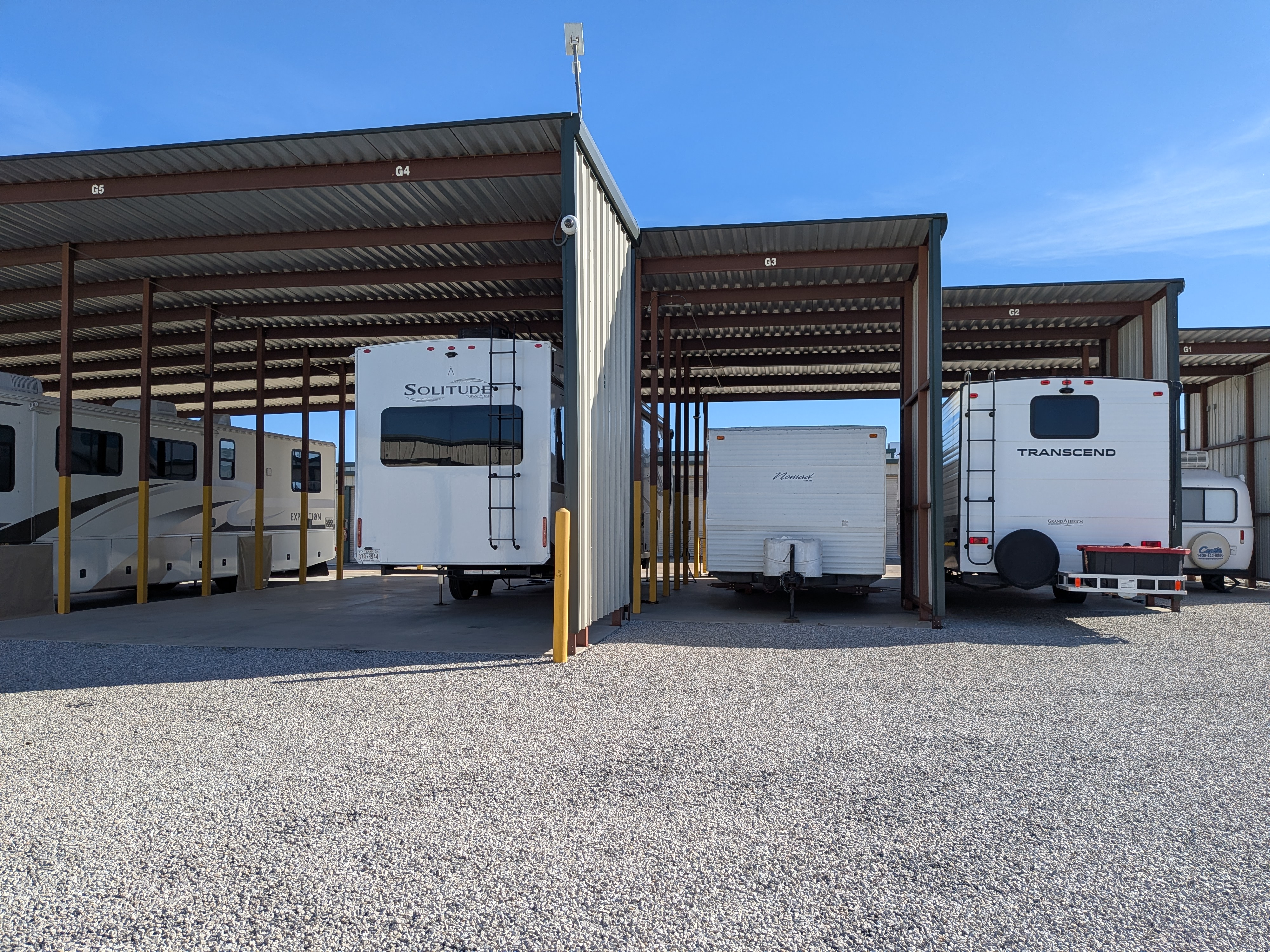
Covered trailer parking adds a roof over your trailer without fully enclosing it. That single change makes a meaningful difference in several specific areas. Direct sun no longer beats down on exposed surfaces for hours every day. Rain doesn’t pool on flat surfaces or work its way into gaps over time. Bird debris and airborne salt particles have less direct contact with paint and metal. For trailers that aren’t built to shrug off years of Gulf Coast exposure, that overhead protection significantly slows the deterioration timeline. The monthly rate for covered parking is higher than open parking. But for owners who calculate what they spend annually on wax, rust treatment, tire replacements, and seal repairs, the math often shifts. Covered parking at a somewhat higher monthly rate can cost less overall than open parking plus accelerated maintenance on the same trailer.
Which Trailers Benefit Most from Covered Storage
Not every trailer needs covered parking. The right choice depends on what you’re storing, how long it will sit, and what condition you need it in when you retrieve it. Covered parking makes the most sense for:
- Newer trailers where maintaining condition and resale value matter
- Enclosed cargo trailers with interior finishes, wiring, or equipment sensitive to moisture
- Boat trailers that already handle regular water exposure and need reduced additional stress from salt air
- Trailers storing equipment, tools, or materials that are affected by heat and humidity
- Any trailer being stored for a full season or longer, where cumulative exposure has the most impact.
Open parking remains a practical and cost-effective choice for trailers that are built for outdoor conditions, rotated frequently, or stored short-term where the exposure window is limited.
Flood Elevation: A Factor Worth Considering Separately
On Galveston Island, flooding is a real storage consideration regardless of which parking type you choose. Storm surge during tropical weather events can affect ground-level storage in ways that have nothing to do with whether your trailer is covered or open. A facility’s physical elevation matters as much as its roof. Bayside Self Storage Galveston was built with 7 feet of added elevation above standard grade, specifically to protect stored vehicles and belongings from flood and storm surge. For trailer owners in Tiki Island, Jamaica Beach, Pirates Beach, and across the West End, that structural decision provides a level of protection that a covered roof alone can’t deliver.
On-Site Amenities That Make Trailer Storage More Practical
Beyond the parking spot itself, the right facility should make managing your trailer easier. Bayside offers several on-site features that trailer owners find genuinely useful between trips:
- A trailer repair shop for quick on-site maintenance before or after use
- Air machines for tires so your trailer leaves road-ready without an extra stop.
- A car wash hose to rinse salt, sand, and road debris before storage
- Fresh water supply for boat owners to clean down after a day on the water
These are not standard features at most storage facilities. For trailer owners who use their equipment regularly, having them on-site reduces the time and effort involved every time you pull in or out.
Making the Right Call for Your Trailer and Your Budget
The honest answer is that there’s no single right choice between covered and open trailer parking — it depends on the trailer, the storage duration, and how you weigh upfront monthly cost against long-term maintenance. What’s worth doing is making that comparison deliberately rather than defaulting to the cheaper option without thinking through what it might cost you over a full season on the Gulf Coast. Galveston’s climate is harder on stored equipment than most owners expect the first time around. Understanding both sides of the cost picture before you commit is the kind of decision that saves money and frustration in the long run. Bayside Self Storage Galveston offers both covered and open trailer parking with flexible month-to-month leases, on-site amenities, and 7 feet of added flood elevation for genuine Gulf Coast protection. Explore available trailer parking options on the website to see current availability, or get in touch with the Bayside team to talk through which option makes the most sense for your trailer and storage timeline. We’re open seven days a week and happy to walk you through the details before you commit.
Categories